TL;DR
The most common gutter problems in Oregon are overflow, sagging, gutters pulling away from the fascia, leaking corners, damaged downspouts, water behind the gutter, pooling near the foundation, and moss that keeps coming back. Most single issues can be repaired. Replacement is usually the better value when problems repeat across an aging system.
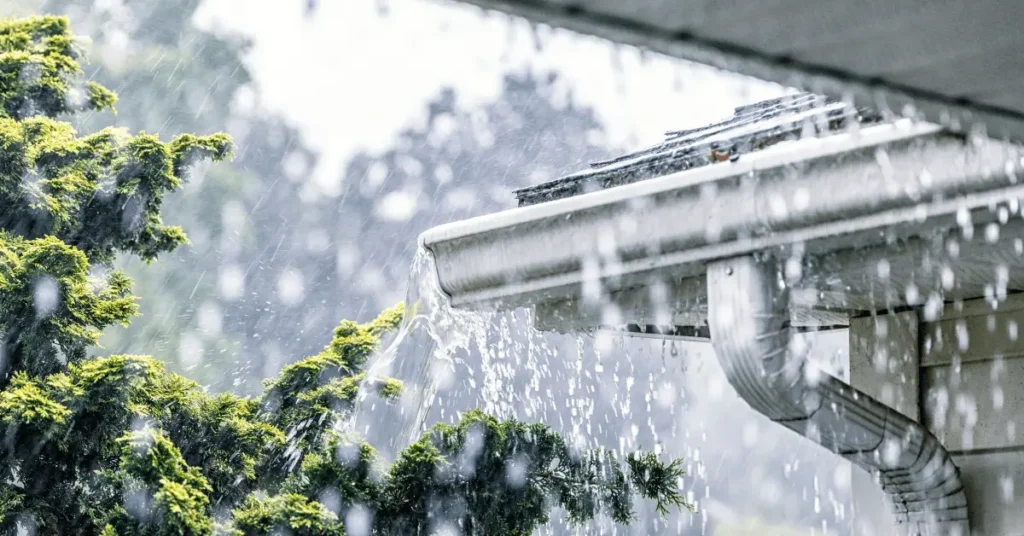
If you own a home in the Portland metro or Columbia County, your gutters work harder than most. A small drip you notice in October can turn into rotted fascia by March, simply because the rain rarely lets up long enough for anything to dry out.
This guide walks through the nine common gutter problems our crews see on Oregon homes, the gutter damage signs to look for, and how to tell whether each one needs a quick repair or a full replacement. It is based on more than 20 years of gutter work in St. Helens, Scappoose, Portland, Beaverton, Hillsboro, and surrounding communities.
Table of Contents
Why Small Gutter Problems Get Expensive in Oregon Rain
Small gutter problems get expensive in Oregon because the rain is long and steady, not occasional. A minor leak that would dry out quickly in a sunny climate stays wet for months here, which gives wood rot, mold, and soil erosion time to do real damage.
The numbers explain why. According to the National Weather Service Portland climate records, the Portland airport averages about 37 inches of precipitation a year and downtown Portland averages about 44 inches, based on 1991 to 2020 normals. November, December, and January each average more than 5 inches at the airport.
Now put that water on your roof. One inch of rain on one square foot of roof produces about 0.623 gallons of water, a standard figure used in rainwater calculations. That means a 2,000 square foot roof sheds roughly 1,250 gallons in a single one-inch rain, and about 46,000 gallons over an average Portland-area year. Every gallon has to pass through your gutters and downspouts.
When gutters fail, that water goes somewhere else. The most common knock-on damage we see includes:
- Fascia and soffit rot from water soaking the wood behind the gutter.
- Siding stains and peeling paint from splashback and overflow.
- Crawlspace and basement moisture when water collects along the foundation.
- Soil erosion and washed-out beds below overflowing sections.
- Slippery walkways and steps from constant drips at entryways.
The good news is that most of these gutter issues show clear warning signs early. Here are the nine to watch for.
| Seeing water where it should not be? Our local crew can pinpoint the cause and tell you whether it is a quick repair or a bigger fix. Get a Free Gutter Inspection or call (503) 308-1174 |
1. Persistent Overflow
Gutters that overflow during normal rain, not just during a cloudburst, are usually clogged, undersized, or sloped the wrong way.
What you will notice
- Water sheeting over the front lip of the gutter.
- Splash lines, trenches, or bare soil in the beds below.
- Dirt streaks or water stains on siding under one section.
Why it happens
In Oregon, the usual culprits are fir needles, maple leaves, roof granules, and moss plugging the outlet where the gutter meets the downspout. Overflow can also happen on clean gutters when two roof slopes dump into one spot, such as a valley, and the gutter or downspout is too small to keep up.
What it can damage
Repeated overflow saturates the soil next to your foundation, splashes mud onto siding, and keeps the fascia wet.
How it gets fixed
Start with a full cleaning and a flush test of each outlet. If a clean gutter still overflows at the same spot, the fix is usually more drainage capacity: a larger 6-inch gutter, a larger 3×4 downspout, or an added downspout. Our downspout installation page explains the options.
Repair or replace? Usually repairable. Recurring overflow at valleys may call for upsizing that section.
2. Sagging or Uneven Runs
A sagging gutter holds standing water, and that extra weight makes the sag worse over time.
What you will notice
- A visible dip or wavy line along the gutter.
- Water still sitting in the gutter long after the rain stops.
- Debris and sludge collecting at the low point.
Why it happens
Gutters should fall gently toward the downspout, commonly around 1/4 inch for every 10 feet. Sagging happens when hangers are spaced too far apart, old spikes loosen, heavy wet debris sits in the trough, or the fascia behind a hanger has softened. Water is heavy, at about 8.3 pounds per gallon, so a clogged run carries a lot of extra load.
What it can damage
Standing water speeds up corrosion, breeds mosquitoes, and pulls on the fasteners until the gutter starts separating from the house.
How it gets fixed
A crew re-hangs the run with hidden hangers and screws, typically spaced every 2 to 3 feet, and resets the pitch toward the outlet.
Repair or replace? Repairable in most cases. If the gutter is kinked or the fascia is rotted, that section may need replacing.
3. Gutters Pulling Away From Fascia
A gap between the gutter and the fascia board means the fasteners, or the wood they are screwed into, have failed.
What you will notice
- A visible gap between the back of the gutter and the fascia.
- The gutter tipping forward or outward.
- Spikes backing out or hangers hanging loose.
Why it happens
Older spike-and-ferrule systems loosen as wood expands and contracts through wet and dry seasons. Once water gets behind the gutter, the fascia softens and can no longer hold a fastener. At higher elevations, snow and ice add extra strain.
What it can damage
Left alone, a separating gutter lets water run straight down the fascia and into the soffit and wall framing. Eventually a section can fall.
How it gets fixed
The damaged fascia is cut out and replaced, then the gutter is re-hung with new hangers. Catching this early keeps it a standard job. Learn more about our gutter repair services.
Repair or replace? Repairable if caught early. Long stretches of rotted fascia make it a larger project.
4. Dripping Corners and End Caps
Leaks at corners (mitres) and end caps are among the most frequent gutter leaks because those joints depend on sealant to stay watertight.
What you will notice
- Steady drips at a corner or the end of a run during rain.
- Dark stains or peeling paint on the fascia near the joint.
- Rust streaks on older steel gutters.
Why it happens
Even seamless gutters have seams at corners and end caps. Sealant breaks down with sun exposure and temperature swings, rivets loosen, and water that sits in a corner keeps working at any weak spot.
What it can damage
Constant drips rot the fascia at corners, stain siding, and can undermine concrete or pavers directly below.
How it gets fixed
The joint is cleaned, old sealant is removed, and fresh gutter sealant is applied, with new rivets if needed. A cracked mitre is replaced. If you want to understand the full range of leak causes, read why gutters leak.
Repair or replace? Repairable, and usually one of the faster fixes on this list.
5. Loose or Crushed Downspouts
A downspout that is disconnected, dented, or crushed cannot move water away from your home, even if the gutters above it are perfect.
What you will notice
- Downspout sections pulled apart or hanging loose.
- Dented or flattened elbows near the ground.
- Water gushing from a joint instead of the outlet.
- A downspout that ends right at the foundation.
Why it happens
Lawn mowers, ladders, settling ground, and missing straps are common causes. Clogged elbows also back water up the downspout until joints separate.
What it can damage
A failed downspout dumps hundreds of gallons in one spot, which leads directly to problem number 7.
How it gets fixed
Damaged sections and elbows are replaced, the downspout is re-strapped to the wall, and an extension carries water away from the house. On large roofs, upgrading from 2×3 to 3×4 downspouts adds capacity. See our downspout installation service for details.
Repair or replace? Repairable, and often the most affordable fix on this list.
| Not sure if it is a repair or a replacement? We will show you what we find, explain your options, and give you a clear written estimate. Schedule an Inspection or call (503) 308-1174 |
6. Water Behind the Gutter
If water runs down between the gutter and the fascia, the roof edge is usually missing flashing, or the gutter is mounted too low.
What you will notice
- Streaks or dark lines on the fascia behind the gutter.
- Water stains on siding even when the gutter is not overflowing.
- Soft, swollen, or peeling fascia and soffit boards.
Why it happens
Rainwater clings to the underside of shingles and follows the roof edge backward. Without a drip edge or gutter apron flashing to bridge that gap, water drops behind the gutter instead of into it. A gutter hung too far below the roof edge causes the same problem.
What it can damage
This is one of the most destructive gutter problems because it is easy to miss. The damage happens behind the gutter, out of sight, until the fascia or soffit fails.
How it gets fixed
Installing gutter apron or drip edge flashing, and resetting the gutter height where needed, redirects water into the trough.
Repair or replace? Repairable, and far cheaper than replacing the fascia and soffit it protects.
7. Pooling Water Near the Foundation
Water that pools within a few feet of your foundation after rain is a drainage failure, and the gutter system is often the root cause.
What you will notice
- Puddles along the house an hour or more after rain stops.
- Washed-out soil or exposed roots near downspouts.
- Damp or musty crawlspace, or white mineral residue on concrete.
Why it happens
Short downspouts, missing extensions, clogged underground drain lines, and soil that slopes toward the house all send water back to the foundation. The International Residential Code (Section R401.3) generally calls for the ground to fall at least 6 inches within the first 10 feet away from a foundation, and many older lots no longer meet that.
What it can damage
Standing water raises crawlspace humidity, invites mold and wood decay, and can contribute to settling and cracks over time.
How it gets fixed
Most cases are solved by extending or relocating downspouts so water discharges well away from the house, and clearing any buried drain lines. Some Oregon cities regulate where downspout water can go, so check local rules before rerouting. Grading problems may also need a landscaper.
Repair or replace? Usually repairable through downspout changes. Serious grading issues are a separate project.
8. Moss and Debris Returning Too Quickly
If your gutters clog again within weeks of a cleaning, the problem is the environment around your home, not the cleaning.
What you will notice
- Gutters full again a few weeks into fall.
- Clumps of green moss in the trough or at outlets.
- Seedlings or grass growing inside the gutter.
Why it happens
Oregon’s mild, wet winters are ideal for moss, and many homes sit under Douglas fir, cedar, or maple. Moss on the roof breaks loose in heavy rain and washes straight into the gutters, while needles slip past many basic screens.
What it can damage
Fast-returning debris causes the overflow, sagging, and standing water described above, and keeps the whole system under constant strain.
How it gets fixed
The long-term fix combines prevention with cleaning: gutter guards designed for fine needles, roof moss treatment, and trimming overhanging limbs. Clean gutters in late fall after leaf drop and again in spring, and more often on heavily treed lots.
Repair or replace? Repair plus prevention. Gutter guards are often the best value for homes under tall trees.
9. Repeated Failures in an Aging System
When you are fixing the same gutter system every season, the system itself has usually reached the end of its useful life.
What you will notice
- Leaks at multiple seams, not just one.
- Rust, pitting, or thin spots in the metal.
- Patchwork repairs, mismatched sections, or faded and peeling paint.
- Old sectional gutters with a seam every 10 feet or so.
Why it happens
Sectional gutters have many joints, and every joint is a future leak. Over decades, metal fatigues, fasteners loosen, and repeated patching adds weak points faster than it removes them.
What it can damage
An aging system leaks in new places each year, so you keep paying for repairs while the fascia and siding continue to take damage.
How it gets fixed
A new seamless system replaces dozens of seams with a continuous run, leaving joints only at corners, end caps, and outlets. Explore our gutter replacement service to see what is involved.
Repair or replace? Replacement is usually the better value.
| Tired of fixing the same gutters every year? Ask about seamless gutter replacement with hidden hangers and stainless screws included. Get a Replacement Estimate or call (503) 308-1174 |
Which Gutter Issues Are Repairable?
Most gutter issues are repairable when the problem is limited to one area and the gutter and fascia are still sound. Leaking corners, loose hangers, damaged downspouts, minor sagging, and missing flashing are all standard repairs.
Use this table to judge where your situation falls:
| Gutter problem | Usually repairable? | Typical fix | Consider replacement when |
|---|---|---|---|
| 1. Persistent overflow | Yes | Clean, clear outlets, add or upsize downspouts | Gutters are undersized for the whole roof |
| 2. Sagging runs | Yes | Re-hang with hidden hangers, reset pitch | Metal is bent or kinked along the run |
| 3. Pulling from fascia | Yes, if caught early | Replace fascia section, re-hang | Rot runs along most of the roofline |
| 4. Leaking corners and end caps | Yes | Reseal, re-rivet, replace mitre | Many joints leak at the same time |
| 5. Damaged downspouts | Yes | Replace sections, re-strap, extend | Rarely a reason on its own |
| 6. Water behind the gutter | Yes | Add drip edge or gutter apron, adjust height | Gutter must be reset along the whole house |
| 7. Pooling at foundation | Usually | Extend or relocate downspouts, clear drains | Drainage design fails across the property |
| 8. Fast-returning debris | Yes, with prevention | Guards, moss treatment, tree trimming | Old gutters cannot support guards |
| 9. Aging system failures | Short term only | Patch individual leaks | Failures repeat every season |
If your problem is on the repairable side of this table, our gutter repair services cover everything from resealing seams to re-hanging full runs.
When Replacement Is the Better Value
Gutter replacement is usually the better value when problems show up in several places at once, the system is 20 or more years old, or you are paying for repairs every year. A common rule of thumb: if the repairs you expect over the next few years would add up to about half the cost of new gutters, replacement usually wins.
Replacement makes the most sense when you notice:
- Three or more of the problems on this list at the same time.
- Rust, holes, or thin metal in more than one section.
- Old sectional gutters with leaking seams along the runs.
- Gutters that are too small for the roof, causing overflow even when clean.
- Fascia that needs replacing anyway, which is the ideal time to install new gutters.
- Plans to replace the roof, since new gutters and flashing are easiest to install together.
Typical gutter lifespan by material
| Material | Commonly cited lifespan | Notes for Oregon homes |
|---|---|---|
| Vinyl | About 10 to 20 years | Can become brittle and sag; less suited to heavy debris loads. |
| Galvanized steel | About 15 to 25 years | Strong, but rust can start early in constant moisture. |
| Seamless aluminum | About 20 to 30 years | Does not rust, few seams; the most common choice for local homes. |
| Copper | 50 years or more | Very durable and premium priced. |
Lifespans are general industry ranges and vary with installation quality, roof pitch, tree cover, and maintenance.
With a seamless system, the only joints are at corners, end caps, and outlets, so there are far fewer places for leaks to start. Every American Gutter Service seamless installation includes hidden hangers and stainless screws. Learn more on our gutter replacement page.
How to Check Your Gutters in 10 Minutes
The easiest way to spot gutter damage signs is to walk around your home during a steady rain and watch where the water goes. You can do this from the ground, with no ladder.
- Walk the full perimeter during steady rain and look for water spilling over the front of any gutter.
- Watch every corner and end cap for drips or streams.
- Look at the fascia behind the gutter for fresh water streaks.
- Check each downspout for leaking joints and confirm water exits away from the house.
- Come back an hour after the rain stops and look for puddles along the foundation or water still sitting in the gutters.
- Take photos of anything unusual so a contractor can assess it quickly.
For safety, leave ladder work and roof-edge inspections to a professional crew.
Frequently Asked Questions About Gutter Problems
What are the most common gutter problems?
The most common gutter problems are clogs and overflow, sagging runs, gutters pulling away from the fascia, leaking corners and end caps, damaged downspouts, water running behind the gutter, and poor drainage at the foundation. In Oregon, moss and fir needles make clogs especially common.
How do I know if my gutters need repair or replacement?
Repair is usually enough when the problem is limited to one area and the gutter metal and fascia are still sound. Replacement is usually the better value when several problems appear at once, the system is 20 or more years old, or you are paying for repairs every year.
Why do my gutters overflow even when they are clean?
Clean gutters that still overflow are usually undersized, sloped incorrectly, or served by too few or too small downspouts. Areas where two roof slopes meet often need a larger gutter or an extra downspout.
Is it normal for water to drip behind my gutters?
No. Water dripping behind the gutter usually means the roof edge is missing drip edge or gutter apron flashing, or the gutter is mounted too low. It should be fixed quickly because it rots the fascia and soffit out of sight.
How often should gutters be cleaned in Oregon?
Most Oregon homes need gutter cleaning at least twice a year, in late fall after the leaves drop and again in spring. Homes under fir, cedar, or maple trees often need more frequent cleaning or gutter guards.
Can gutter problems cause foundation damage?
Yes. Overflowing gutters and short downspouts can send large amounts of water to the base of your home, which can lead to crawlspace moisture, soil erosion, and settling over time.
What are the signs of gutter damage?
Common gutter damage signs include water spilling over the edge, visible sagging, gaps at the fascia, drips at corners, rust or peeling paint, stains on siding, and puddles along the foundation after rain.
Get a Straight Answer From a Local Gutter Crew
Most common gutter problems start small, and in Oregon’s long rainy season they rarely stay that way. Catching overflow, sagging, leaks, and drainage issues early is the simplest way to protect your fascia, siding, and foundation.
American Gutter Service has served homeowners, landlords, and property managers for more than 20 years across St. Helens, Scappoose, Portland, Beaverton, Hillsboro, Lake Oswego, Gresham, Wilsonville, and nearby communities. We will inspect your system, show you what we find, and tell you honestly whether a repair will do the job or replacement makes more sense.
| Protect your home before the next big storm Free estimates from a local, 5-star rated gutter team. Serving Columbia County and the Portland metro. Get My Free Estimate or call (503) 308-1174 |