Quick Answer:
Most Pacific Northwest homes should clean their gutters at least twice a year, once in late spring and again in late fall. But homes surrounded by Douglas firs, pines, or cedars need 3 to 4 cleanings a year, because conifers shed needles year-round and the region gets 36–44 inches of rain annually. Homes with gutter guards can usually drop to a single yearly inspection.
Why Gutter Cleaning Is Different in the Pacific Northwest
If you moved here from somewhere drier, the “clean your gutters twice a year” advice you grew up with doesn’t fully apply. The PNW throws three things at your gutters that most of the country doesn’t deal with all at once.
1. Relentless rain. Downtown Portland averages roughly 44 inches of precipitation a year, with November and December alone dropping 6–7 inches each, according to National Weather Service climate data. When a clog meets that volume of water, it overflows fast, usually onto your fascia and down your siding.
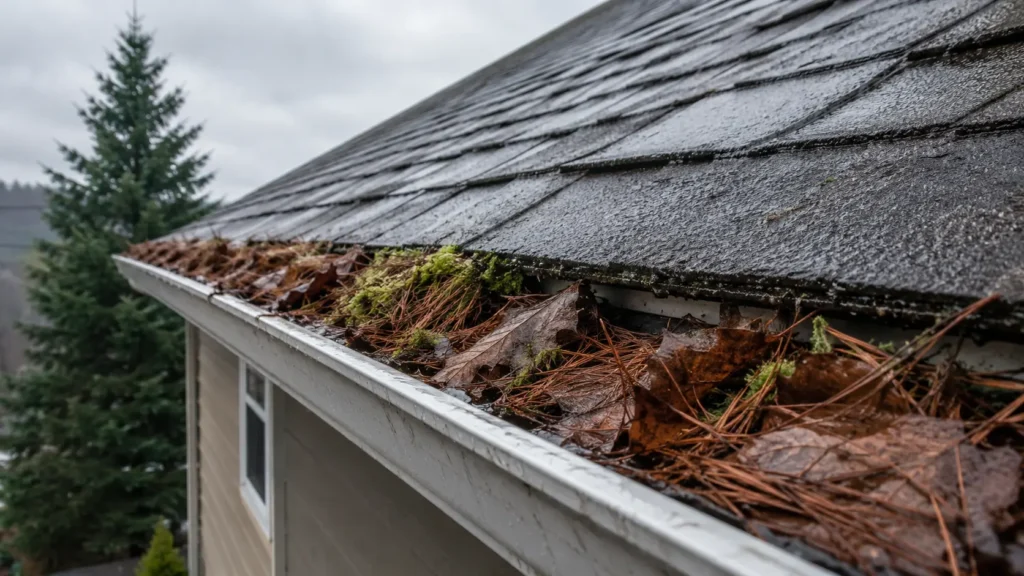
2. Conifers that never stop dropping. Here’s what catches new homeowners off guard: evergreens aren’t actually “ever-green.” Oregon State University Extension notes that conifers like Douglas-fir naturally shed their older needles through summer and fall. Those fine needles slip past leaf strainers, pack down into a dense mat, and hold water like a sponge.
3. Moss. Our wet, shaded roofs grow moss, and that moss sloughs off into the gutter along with shingle grit. It’s the single most common thing we find clogging gutters on older Columbia County and Portland-metro homes.
How Often Should You Clean Your Gutters? (By Situation)
There’s no single right answer, it depends on what’s growing around your house. Use this as your baseline:
| Your situation | Recommended frequency | Why |
|---|---|---|
| Few or no trees nearby | 2× a year (spring + fall) | Standard PNW rain load; mostly airborne grit and moss |
| Moderate cover (some deciduous trees) | 3× a year | Heavy leaf drop in fall on top of the rain |
| Heavy conifer cover (fir, pine, cedar) | 4+ × a year | Year-round needle drop forms dense, water-holding mats |
| Branches overhanging the roof | Every 2–3 months in peak season | Constant fine debris straight into the trough |
| Gutter guards installed | 1× a year inspection | Guards block the bulk of needles, leaves, and moss |
Rule of thumb: if you can see tree canopy above your roofline, assume the higher end of the range.
The PNW Gutter Cleaning Calendar
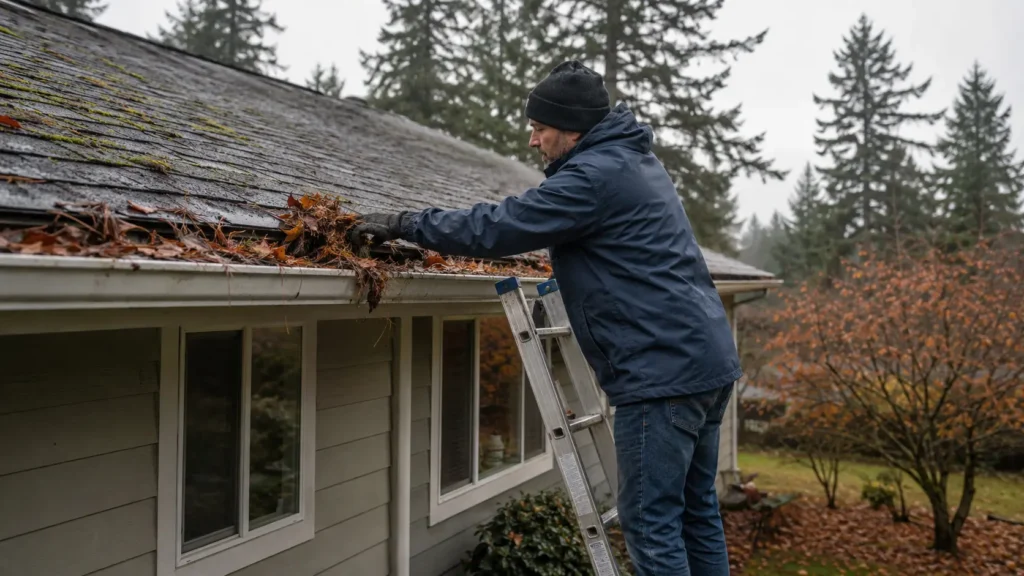
Timing matters as much as frequency. Cleaning at the wrong time means you do the work and the gutters are clogged again before the rain arrives. Here’s the schedule we recommend for Oregon homes:
- Early fall (late September–October): Clear the summer needle drop before the rainy season starts. This is the cleaning most people skip — and the one that prevents the first big storm from overflowing.
- Late fall (November–December): The most important pass of the year. Deciduous leaves are down, fir needles are still falling, and the heaviest rain is here. Don’t wait until January.
- Spring (April–May): Clear out winter debris and moss, and check for cold-weather damage. (Here are the signs you need gutter repair after an Oregon winter.)
- Summer check (optional, July–August): A quick look for conifer-heavy lots. Even in the dry months, fir needles keep dropping.
Signs Your Gutters Need Cleaning Right Now
Forget the calendar if you notice any of these, they mean your gutters are already overdue:
- Water sheeting or spilling over the edge during rain instead of draining through the downspout
- Sagging sections or gutters pulling away from the fascia
- Plants, seedlings, or “gutter gardens” sprouting in the trough
- Stains or streaks running down your siding below the gutter line
- Water pooling near your foundation after a storm
- Birds, rodents, or insects nesting in the gutter
If your gutters are overflowing or dripping even after a cleaning, the problem may be the gutters themselves, not the debris. See why gutters leak and how to fix the 7 most common causes, and if it’s storm-related and urgent, we offer same-day emergency gutter repair in Portland.
What Happens If You Don’t Clean Them?
Skipping cleanings in a climate this wet doesn’t just risk a clog, it’s how small problems become expensive ones:
- Fascia and soffit rot. Overflowing water saturates the wood your gutters are attached to, eventually rotting it out.
- Foundation and basement issues. Water dumping at the base of your home is the leading cause of foundation seepage and wet crawl spaces.
- Winter weight and freeze damage. A trough full of soaked debris is heavy, and when it freezes, that weight can tear gutters off the house.
- Gutters pulling away entirely. Once hangers fail, you’re looking at repair vs. replacement instead of a $0 afternoon of maintenance.
In short: an hour of cleaning protects the roof, siding, and foundation behind it.
How to Clean Gutters Far Less Often: Gutter Guards
If climbing a ladder three or four times a year in the Oregon rain doesn’t sound appealing, you’re not alone. The most reliable way to cut your gutter cleaning down to a single annual inspection is a quality gutter guard system.
One important caveat: not all guards are built for what falls here. A lot of guards are designed (and marketed) around large leaves. PNW debris is different, fine fir needles, moss, and roof grit slip straight through cheap mesh. We install guards sized for Pacific Northwest debris, not the broad leaves you see in national TV ads. You can see real pricing in our Portland gutter guard cost guide.
And if your gutters overflow even when they’re clean, the issue may be capacity, not debris. Homes with large or steep roofs often need 6-inch K-style gutters, which move about 50% more water than standard 5-inch.
Should You Clean Gutters Yourself or Hire a Pro?
For a single-story home with good footing, gutter cleaning is a reasonable DIY job, gloves, a scoop, a stable ladder, and a hose. But in the PNW, weigh two real risks: wet, moss-covered roofs are genuinely slippery, and two-story ladder work over uneven ground sends people to the ER every year.
A note on AGS specifically: we’re an installation, repair, and gutter guard company, we don’t offer standalone gutter cleaning. What we do is solve the reason you’re cleaning so often: installing guards so debris never builds up, or repairing and resizing gutters that overflow no matter how clean they are. If you’re tired of the ladder routine, that’s where we come in.
Frequently Asked Questions
How often should I clean my gutters if I have a lot of trees?
Homes surrounded by conifers (Douglas fir, pine, cedar) should clean gutters at least 4 times a year, and every 2–3 months during peak needle drop if branches overhang the roof. Fir needles fall year-round and clog faster than leaves.
What is the best time of year to clean gutters in Oregon?
The two highest-priority cleanings are early fall (late September–October), before the rainy season begins, and late fall (November–December), after leaves are down. A spring cleaning to clear winter debris and check for damage is also recommended.
Do I need to clean my gutters in winter?
You shouldn’t need a mid-winter cleaning if you cleared them in late fall. The goal is to enter the wettest months (November through February) with clear gutters so heavy rain drains freely and debris can’t freeze and add weight.
Do gutter guards eliminate gutter cleaning?
Quality gutter guards don’t eliminate maintenance entirely, but they reduce it dramatically — most homeowners go from 3–4 cleanings a year to a single annual inspection. The key is choosing guards rated for fine debris like fir needles, not just large leaves.
How much does gutter cleaning cost in Portland?
Professional gutter cleaning in the Portland area typically runs $100–$300 depending on home size and roof access. American Gutter Service does not offer standalone cleaning, but we install gutter guards and repair gutters so you spend far less on recurring cleanings over time.
What happens if I never clean my gutters?
Clogged gutters overflow, saturating fascia and soffits until they rot, sending water against your foundation, and eventually pulling away from the house under the weight of soaked debris — turning a free maintenance task into a costly repair or replacement.
Tired of Cleaning Gutters Every Few Months?
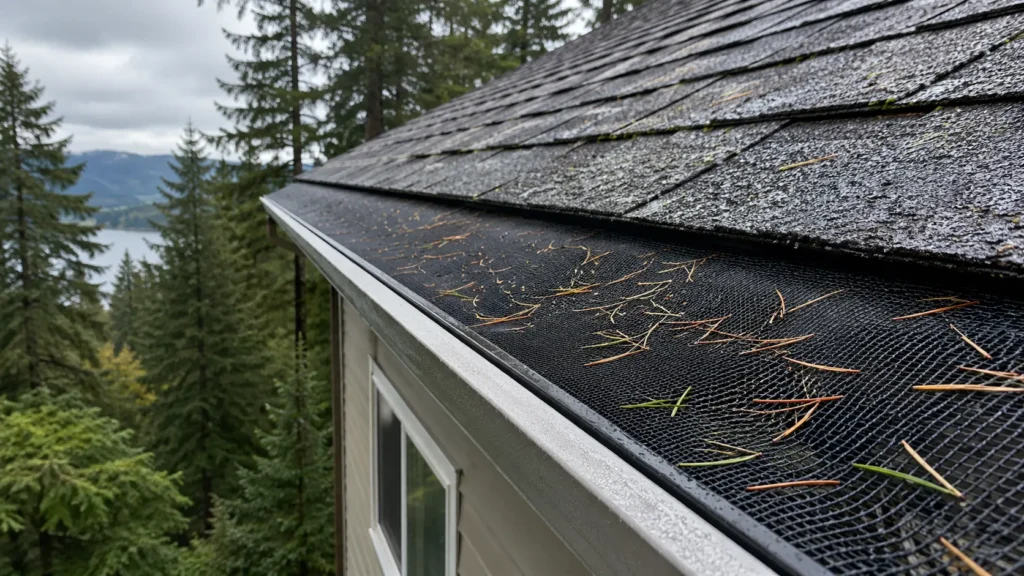
American Gutter Service has spent 20+ years on Oregon rooflines from St. Helens to Portland. If your gutters are overflowing, pulling away, or just clogging faster than you can keep up with, we’ll fix the root cause, with PNW-rated gutter guards, repairs, or properly sized seamless gutters.
➤ Request your free same-day estimate or call (503) 308-1174. Serving St. Helens, Scappoose, Portland, Beaverton, Hillsboro, Lake Oswego, and 12+ more Columbia County and Portland-metro cities.
About the author: Camron Chappelle is the owner of American Gutter Service, a licensed, bonded, and insured seamless gutter company based in St. Helens, Oregon (Oregon CCB #110122). With years of experience in installing and repairing gutters across the Portland metro and Columbia County, Camron and his crew know exactly how PNW rain and conifers behave on a roofline, because they live and work here.