Quick Answer:
6-inch K-style gutters handle approximately 50% more water than standard 5-inch gutters, making them essential for homes with large or steep roofs, areas with heavy rainfall, or properties surrounded by trees. In Oregon, where annual rainfall averages 36–43 inches, 6-inch K-style seamless gutters are the recommended upgrade for roof areas exceeding 1,400 square feet or roof pitches steeper than 6:12. They cost roughly $2–$3 more per linear foot than 5-inch gutters, but the added protection against overflow and water damage makes them one of the smartest investments for Pacific Northwest homeowners.
What Are 6-Inch K-Style Gutters?
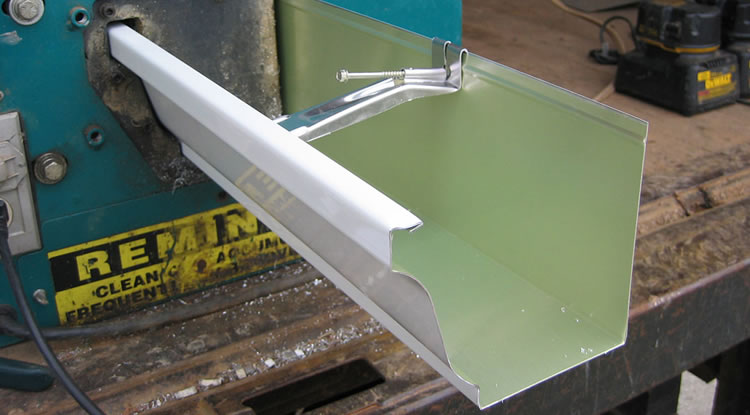
6-inch K-style gutters are oversized rain gutters with a flat back and a decorative front profile that resembles crown molding. The “K-style” name comes from their cross-section, which loosely forms the shape of the letter K. At 6 inches wide, these gutters are one inch larger than the standard 5-inch residential size, giving them a significantly greater water-carrying capacity.
K-style gutters are the most common gutter profile installed on American homes today. If you’re unfamiliar with the design, our complete guide on what K-style gutters are and why they’re popular in Oregon covers the basics in detail. This article focuses specifically on when and why you should upgrade from the standard 5-inch size to the larger 6-inch profile.
The 6-inch K-style gutter is designed for situations where standard gutters cannot keep up with the volume of water running off your roof. They are most commonly fabricated from aluminum, although steel and copper options are also available.
Key Specifications at a Glance
| Specification | 5-Inch K-Style | 6-Inch K-Style |
| Opening Width | 5 inches | 6 inches |
| Water Capacity | ~1.2 gallons/ft | ~2.0 gallons/ft |
| Recommended Roof Area | Up to 1,400 sq ft | 1,400+ sq ft |
| Recommended Downspout | 2″ × 3″ | 3″ × 4″ |
| Best For | Standard homes | Large/steep roofs, heavy rain areas |
5-Inch vs. 6-Inch K-Style Gutters: Capacity Comparison
The difference between a 5-inch and 6-inch K-style gutter might seem small on paper, but the real-world performance gap is substantial. A 6-inch K-style gutter holds roughly 2.0 gallons of water per linear foot, compared to approximately 1.2 gallons for a 5-inch gutter. That’s nearly 50% more capacity from just one additional inch of width.
This extra capacity becomes critical during heavy downpours. When rain intensity exceeds what your gutters can handle, water spills over the edge, which is exactly the kind of overflow that causes foundation erosion, basement flooding, fascia rot, and landscape damage.
For context, seamless gutters of either size will outperform sectional gutters because they eliminate leak-prone seams. But when you combine the seamless design with the larger 6-inch profile, you get a gutter system that handles significantly more water with far fewer failure points.
How Roof Pitch Affects Gutter Size
Your roof’s pitch (steepness) directly affects how quickly water reaches your gutters. Steeper roofs accelerate rainwater, delivering it to the gutter faster and in larger surges. Here is a general guideline:
| Roof Pitch | Rain Intensity Factor | Recommended Gutter Size |
| Low (3:12 or less) | 1.0x | 5-inch K-style |
| Medium (4:12 to 5:12) | 1.05x–1.1x | 5-inch (or 6-inch for large roofs) |
| Steep (6:12 to 9:12) | 1.2x–1.3x | 6-inch K-style recommended |
| Very Steep (10:12+) | 1.4x+ | 6-inch K-style essential |
In Oregon, many older Portland homes have steep gable roofs designed to shed heavy rain quickly. While this is great for preventing water from pooling on the roof, it means the gutters receive water at a much faster rate, making oversized gutters a practical necessity rather than a luxury.
7 Signs You Need 6-Inch K-Style Gutters
Not every home needs oversized gutters. But if you’re experiencing any of the following issues, upgrading to 6-inch K-style gutters may be the right solution.
1. Water Overflows During Heavy Rain
If you see water cascading over the edges of your gutters during storms—even when they’re clean—your current 5-inch gutters likely cannot handle the volume. This is the most common indicator that an upgrade is needed. Overflowing gutters cause the exact same damage as having no gutters at all: eroded soil around the foundation, stained siding, and pooling water that can seep into basements or crawl spaces. If your gutters are also pulling away from the fascia, the excess weight from overflow water may be contributing to the problem.
2. Your Roof Area Exceeds 1,400 Square Feet
Roof area is the single most important factor in determining gutter size. The larger your roof, the more rainwater it collects and channels into the gutters. For roof drainage areas exceeding 1,400 square feet per gutter run, industry standards recommend upgrading to 6-inch gutters.
3. You Have a Steep Roof Pitch (6:12 or Greater)
As outlined in the comparison table above, steep roofs deliver water faster. A roof with a 6:12 pitch or greater effectively increases the rain load on your gutters by 20–40%, making 6-inch K-style gutters the safe choice.
4. Your Home Is Surrounded by Mature Trees
Leaves, pine needles, and small branches that accumulate inside gutters reduce their effective capacity. A 6-inch gutter provides more room for water to flow around partial debris buildup before overflowing. Pairing 6-inch gutters with high-quality gutter guards is the most effective long-term solution for tree-heavy properties.
5. You Have Multiple Roof Valleys Converging into One Gutter Run
Roof valleys channel water from two roof planes into a single stream. When two or more valleys empty into the same gutter section, the surge can easily overwhelm a 5-inch system. This is common on homes with complex rooflines featuring dormers, additions, or L-shaped layouts.
6. You’re Replacing Old, Damaged Gutters
If your current gutters are at the end of their lifespan and need full replacement, it’s the ideal time to upgrade to 6-inch. The cost difference between repair and replacement can be minimal when you factor in the long-term benefits of a properly sized system. Our gutter replacement cost guide breaks down pricing by material and home size.
7. You Own a Commercial Property or Multi-Story Building
Commercial buildings and multi-story homes collect significantly more water due to their larger roof footprints. 6-inch K-style gutters with 3″ × 4″ downspouts are the minimum standard for most commercial applications. For very large commercial roofs, even wider profiles may be necessary.
Why Seamless Matters Even More at 6 Inches
K-style seamless gutters are custom-fabricated on-site from a single continuous piece of metal, eliminating the joints where sectional gutters are prone to leaking. This design advantage becomes even more important at the 6-inch size for several reasons. For a deeper dive into seamless gutter benefits, read our article on what seamless gutters are and whether they’re worth the extra cost.
First, 6-inch gutters handle more water, which means more hydrostatic pressure at every joint. Seams that might hold up under normal 5-inch flow can fail under the increased volume and pressure of a 6-inch system. Second, 6-inch gutters are often installed on homes with challenging conditions like steep roofs, heavy tree cover, large drainage areas—where gutter failure has more severe consequences. Third, the seamless design reduces maintenance. With fewer joints to re-seal over time, your gutter system stays watertight longer.
At American Gutter Service, every 6-inch K-style gutter we install is fabricated seamlessly on-site. Our gutter machine extrudes the profile from a continuous coil of aluminum, cut precisely to fit your roofline. Learn more about the five key reasons Oregon homeowners prefer seamless gutters in our article on why seamless gutters are the best choice.
6-Inch K-Style Gutter Cost in Oregon (2026)
6-inch K-style gutters typically cost $2 to $3 more per linear foot than their 5-inch counterparts. Here is what Portland-area homeowners can expect to pay in 2026:
| Material | 5-Inch (per LF) | 6-Inch (per LF) | 6-Inch Whole Home* |
| Aluminum (Seamless) | $9–$15 | $11–$18 | $1,650–$3,600 |
| Steel (Galvanized) | $10–$17 | $12–$20 | $1,800–$4,000 |
| Copper | $25–$40 | $30–$50 | $4,500–$10,000 |
*Based on 150–200 linear feet, a typical Portland home. Includes installation labor.
The additional $2–$3 per foot for 6-inch gutters translates to roughly $300–$600 more for a full home installation. When you consider that a single foundation repair can cost $5,000 to $15,000, the upgrade cost is minimal insurance against water damage.
Materials Available for 6-Inch K-Style Gutters
Aluminum (Most Popular)
Aluminum is by far the most popular material for 6-inch K-style seamless gutters. It is lightweight, resistant to rust, available in dozens of colors, and performs exceptionally well in Oregon’s wet climate. Most residential 6-inch installations use 0.027-gauge or 0.032-gauge aluminum, with the heavier gauge providing additional rigidity and dent resistance.
Galvanized Steel
Steel gutters offer superior strength and are often used on commercial properties or homes in areas with heavy snowfall. They can support greater weight from snow, ice, and ladder placement. However, they are heavier than aluminum and require a protective coating to prevent rust over time.
Copper
Copper gutters are a premium option chosen for their exceptional longevity (50+ years) and distinctive appearance. They develop a natural green patina over time that many homeowners find attractive. Copper 6-inch K-style gutters are most commonly seen on historic or high-end custom homes.
6-Inch K-Style Gutters and Gutter Guards
One common question is whether gutter guards work effectively with 6-inch gutters. The answer is yes, and in fact, many gutter guard systems are designed specifically for the 6-inch profile.
Micro-mesh gutter guards are the most effective type for 6-inch K-style gutters, particularly in Oregon where pine needles and fine debris are common. The wider opening of a 6-inch gutter also means the guard has a larger surface area for water intake, which can improve flow rates compared to the same guard on a 5-inch system.
Oregon homeowners should be aware that moss buildup is a serious threat to gutter systems regardless of size. Even with 6-inch gutters, periodic inspection and cleaning are recommended. Gutter guards reduce cleaning frequency but do not eliminate maintenance entirely.
Installation Process: What to Expect
Installing 6-inch K-style seamless gutters follows the same general process as standard gutter installation, with a few key differences.
Step 1: On-Site Assessment. A technician inspects your roofline, measures drainage areas, evaluates roof pitch, counts valleys and corners, and determines the optimal gutter run layout. This is where we confirm whether 6-inch gutters are the right size for your home.
Step 2: On-Site Fabrication. Our gutter machine is brought to your property and extrudes the 6-inch K-style profile from a continuous aluminum coil, cut to the exact length of each run. No seams, no joints along the run.
Step 3: Installation. The gutters are hung with hidden hangers screwed into the fascia board, with proper slope toward the downspout locations (typically ¼ inch of drop per 10 feet of run).
Step 4: Downspouts. For 6-inch gutters, we recommend 3″ × 4″ oversized downspouts to match the increased capacity. Downspouts are positioned every 30–40 feet of gutter run.
Step 5: Final Inspection. We check for proper slope, test water flow, verify all connections, and clean up the work area.
Most residential 6-inch K-style gutter installations are completed in one day. For a detailed breakdown of installation timelines by home size, see how long gutter installation takes in Oregon. If you’re also replacing your roof, read our advice on whether to remove gutters when replacing a roof to coordinate both projects efficiently.
Frequently Asked Questions
What is the difference between 5-inch and 6-inch K-style gutters?
The primary difference is water-carrying capacity. A 6-inch K-style gutter holds approximately 2.0 gallons per linear foot compared to 1.2 gallons for a 5-inch gutter, roughly 50% more capacity. The 6-inch profile also pairs with larger 3″ × 4″ downspouts, whereas 5-inch gutters typically use 2″ × 3″ downspouts. In terms of appearance, both share the same decorative K-style profile, so the visual difference is subtle from the ground.
Are 6-inch K-style gutters worth the extra cost?
Yes, for homes that need them. The $300–$600 premium for a full home upgrade is a fraction of the cost of repairing water damage caused by undersized gutters. If your home has a roof area over 1,400 square feet, a steep pitch, or experiences regular gutter overflow, the investment pays for itself by preventing foundation erosion, fascia rot, and basement water intrusion.
Can I replace just some sections with 6-inch gutters?
Technically yes, but it is generally not recommended. Mixing 5-inch and 6-inch gutters on the same home creates transition points that can restrict flow and cause backups. If you upgrade, it’s best to replace the entire system for consistent performance and appearance.
Do 6-inch K-style gutters look too big on a house?
In most cases, no. The 6-inch K-style profile is only one inch wider than the 5-inch version, and from the ground, the difference is barely noticeable. On larger homes where 6-inch gutters are typically recommended, they actually look more proportional to the roofline than the smaller 5-inch size.
What size downspout do I need with 6-inch K-style gutters?
We recommend 3″ × 4″ rectangular downspouts with 6-inch K-style gutters. These oversized downspouts move water away from the house roughly twice as fast as the standard 2″ × 3″ downspouts used with 5-inch gutters. For step-by-step downspout guidance, see our article on how to install a gutter downspout.
How long do 6-inch K-style aluminum gutters last?
Seamless aluminum 6-inch K-style gutters typically last 20 to 30 years or more with proper maintenance. The seamless design reduces failure points, and aluminum is naturally resistant to rust and corrosion. In Oregon’s climate, the primary maintenance tasks are cleaning debris and inspecting for moss buildup.
Are 6-inch gutters required by code in Oregon?
Oregon building codes do not specify a minimum gutter size for residential properties. However, the International Residential Code (IRC) does require that roof drainage systems adequately handle the expected rainfall for the region. In practice, many professional installers in the Portland metro area recommend 6-inch gutters for homes where calculations show that 5-inch gutters would be insufficient.
| Not Sure If You Need 6-Inch Gutters? Our team will inspect your roof, measure your drainage areas, and recommend the right gutter size for your home at no charge. We’ve served the Portland metro area for 20+ years, and we’ll give you an honest recommendation, even if 5-inch gutters are all you need. Call (503) 308-1174 or request a free estimate online |