
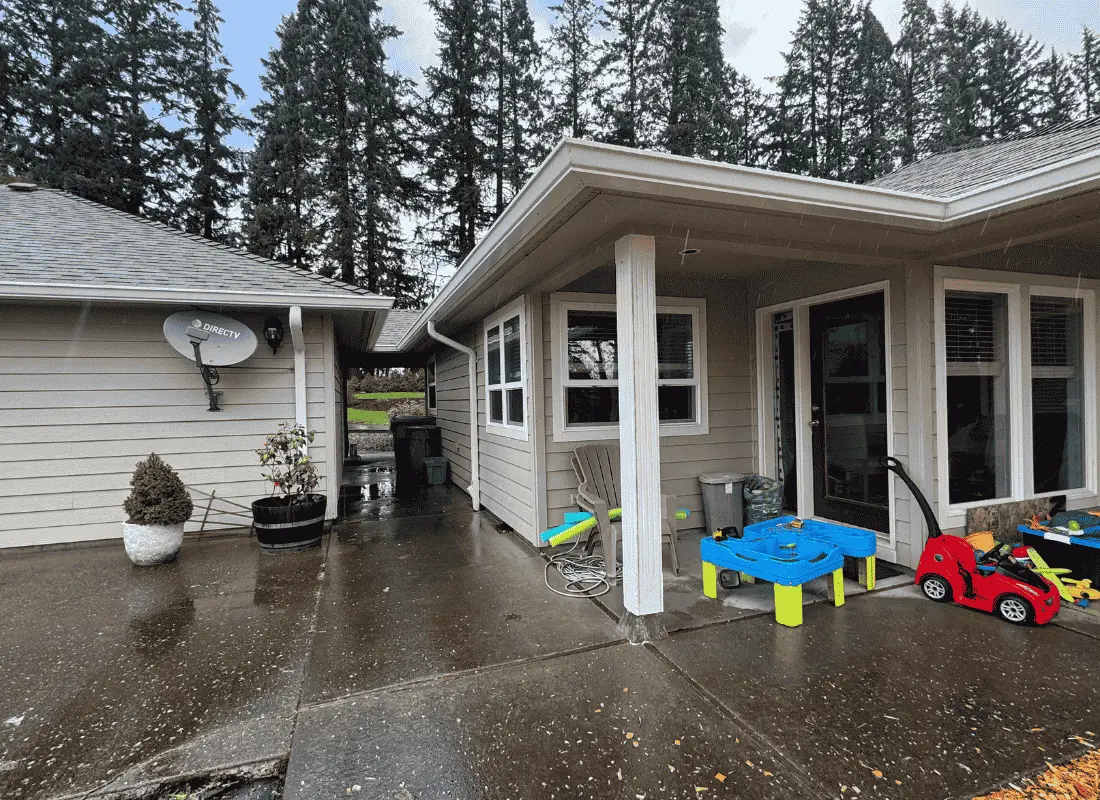
Most professional gutter installations take between 1 and 4 hours for an average-sized home. A small, single-story house with a simple roofline can be finished in as little as one to two hours, while larger or multi-story homes with complex roof angles may need a full day or more. The exact timeline depends on factors like your home’s linear footage, the type of gutters you choose (seamless vs. sectional), whether your old gutters need to be removed first, and the condition of your fascia boards. Below, we break down every variable so you know exactly what to expect before, during, and after your gutter installation.
Gutter Installation Time: Quick-Reference Chart
Use this table for a fast estimate based on your home size and gutter type. Times assume a professional crew of two to four installers and include old gutter removal where applicable.
| Home Size / Type | Seamless Gutters | Sectional Gutters | DIY Estimate | Typical Linear Ft |
| Small single-story (under 1,500 sq ft) | 1–2 hours | 2–3 hours | 8–12 hrs | 80–120 ft |
| Average single-story (1,500–2,500 sq ft) | 1–4 hours | 3–5 hours | 12–20 hrs | 120–200 ft |
| Large home (3,000+ sq ft) | 4–8 hours | 6–10 hours | 20+ hrs | 200–300 ft |
| Multi-story / complex roofline | 1 full day | 1–1.5 days | Multiple days | 250–400+ ft |
| Very large / commercial | 1–2 days | 2–3 days | Not recommended | 400+ ft |
Quick math: Divide your home’s square footage by roughly 10 to estimate the linear feet of gutters you need. A professional crew can install approximately 150 linear feet in about seven hours, so most residential jobs wrap up within a single day.
Need gutters installed on your Oregon home? Get a free quote from American Gutter Service — most jobs completed in a single day.
Step-by-Step Gutter Installation Timeline: What Happens and How Long Each Phase Takes
A complete gutter project involves more than just the hands-on installation. Here’s the full timeline from first call to final walkthrough.
Pre-Installation Phase
Initial consultation and estimate (1–2 hours on-site). Your gutter contractor visits the property, measures the roofline, inspects the fascia and soffit for damage, and discusses material and style options. At American Gutter Service, we provide this estimate at no charge.
Material selection and scheduling (1–3 days). You choose your gutter material, color, profile (K-style or half-round), and size. The contractor orders materials and schedules the work.
Lead time from contract to installation day: typically 1–2 weeks, depending on season and contractor availability. Off-peak months (late fall through early spring) often mean shorter wait times.
Installation Day: Hour-by-Hour Breakdown
Step 1 — Old gutter removal (1–4 hours). If you have existing gutters, the crew carefully removes them along with all brackets, downspouts, and hardware. Corroded or rusted gutters can slow this step. If your home doesn’t have existing gutters, the crew skips straight to inspection.
Step 2 — Fascia and soffit inspection and repair (30 minutes to 2 hours). Before any new gutter goes up, the crew checks the fascia boards for rot, mold, or water damage. Damaged fascia must be repaired or replaced first. Installing gutters on compromised wood leads to sagging and pulling away within months. Fascia repair typically costs $6–$15 per linear foot. Learn more in our gutter sag vs. rotted fascia guide.
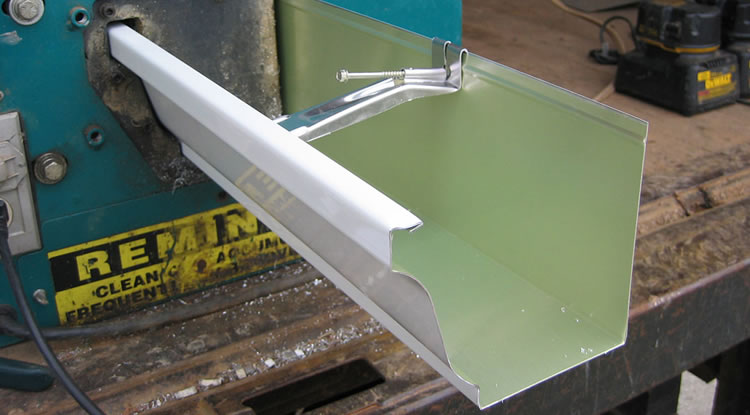
Step 3 — On-site gutter fabrication (approximately 1 hour, seamless only). For seamless gutters, the crew uses a portable roll-forming machine to custom-fabricate your gutters on-site. Each section is cut to the exact length of your roofline, minimizing seams and reducing future leak points. Sectional gutters skip this step since they arrive pre-cut.
Step 4 — Gutter mounting and alignment (1–4+ hours). Hangers or brackets are fastened every 18–24 inches along the fascia. Gutters are installed with a precise slope of approximately ¼ inch of drop per 10 feet of run, angling toward each downspout outlet. Proper slope is critical, too little and water pools; too much and it overflows during heavy Oregon rain.
Step 5 — Downspout installation (30 minutes to 1 hour). Downspouts are positioned every 30–40 linear feet of gutter run (most homes need four to eight). Each includes elbows at the top and bottom to direct water away from the foundation. For detailed guidance, see our step-by-step downspout installation guide.
Step 6 — Sealing and water testing (15–30 minutes). All joints, end caps, and connections are sealed with professional-grade sealant. The crew runs water through the system to confirm proper flow, check for leaks, and verify that downspouts direct water away from your home’s foundation.
Step 7 — Final cleanup and walkthrough (30 minutes to 1 hour). Old materials, debris, and packaging are removed. The crew walks you through the completed installation, pointing out gutter placement, downspout locations, and any maintenance recommendations.
Need gutters installed on your Oregon home? Get a free quote from American Gutter Service — most jobs completed in a single day.
7 Factors That Affect How Long Gutter Installation Takes
Every home is different. These seven variables determine whether your project finishes in a couple of hours or stretches into a second day.
1. Home Size and Linear Footage
Linear footage is the single biggest predictor of installation time. Most homes need 100–200 linear feet of gutters. A 2,000-square-foot home typically requires about 200 linear feet, while a large home exceeding 3,000 square feet may need 300 or more. Jobs over 300 linear feet often extend beyond one day.
2. Number of Stories
Single-story homes allow standard ladder access and straightforward workflow. Two-story and three-story homes require taller ladders, scaffolding, and safety harnesses, all of which add 10–30% more time and roughly $1–$7 per linear foot in additional labor costs. If you live in a multi-story home in the Portland metro area, expect the project to take a full day rather than a half day.
3. Roof Pitch and Complexity
A simple, gently pitched roof is the fastest to work on. Steep pitches require harness systems and slow the crew significantly. Complex rooflines, those with multiple valleys, dormers, peaks, and inside corners demand custom cuts at each transition and careful fitting at every angle change. A home with eight or more corners will take noticeably longer than one with a basic rectangular footprint.
4. Gutter Type: Seamless vs. Sectional
Seamless gutters are generally faster for professional crews to install because there are fewer connection points to seal. However, they require on-site fabrication with a portable roll-forming machine (about an hour of setup and rolling time). Sectional gutters come in pre-cut 10–20-foot sections from the hardware store, but each joint must be connected, sealed, and aligned, which adds up on longer runs. We cover the full comparison below.
5. Gutter Material
The material you choose directly affects handling speed. Vinyl is the fastest to install because it’s lightweight and snaps together without specialized tools. Aluminum is the industry standard: light, easy to cut, and available in both seamless and sectional options. Steel is heavier, requiring sturdier fasteners and more careful handling. Copper and zinc are the slowest, requiring specialized soldering at joints and professional-only installation skills. See the material comparison table below for a full breakdown.
6. Weather Conditions
Dry, mild days are optimal for gutter work. Rain creates slippery surfaces and prevents sealants from curing properly. Strong winds make ladder work dangerous, especially on multi-story homes. Freezing temperatures can make metal brittle and hands less nimble. In Oregon, the best installation months are typically late spring through early fall, though experienced crews (like ours) work through mild winter days as well.
7. Existing Gutter Removal and Fascia Condition
Removing old gutters adds one to four hours depending on home size, the number of fasteners, and the condition of the old system. Rusted or corroded gutters take longer to pull down safely. The real wildcard is fascia condition: if your fascia boards are rotted, soft, or water-damaged, they must be repaired before new gutters go up. Fascia repair adds $6–$15 per linear foot and can extend the project by several hours. Check our signs you need gutter repair guide to assess your current system before scheduling installation.
Seamless Gutters vs. Sectional Gutters: Installation Comparison
Choosing between seamless gutters and sectional gutters affects both installation time and long-term performance. Here’s a side-by-side comparison.
| Factor | Seamless Gutters | Sectional Gutters |
| Installation Speed | Faster — fewer connection points to seal | Slower — each section must be joined and sealed |
| Equipment Required | Portable roll-forming machine (professional only) | Standard hand tools (DIY possible) |
| On-Site Fabrication | Yes, approximately 1 hour for machine setup and rolling | No — pre-cut sections from hardware store |
| Cost Per Linear Foot | $5–$40 ($8–$28 typical) | $3–$20 |
| Expected Lifespan | 25–100 years (varies by material) | 10–15 years |
| Leak Risk | Minimal — seams only at corners and downspouts | Higher — seams every 10–20 feet |
| Maintenance Level | Low | Higher — reseal joints every 1–5 years |
| DIY Possible? | No | Yes (vinyl or aluminum only) |
Our recommendation: For Oregon homes dealing with heavy seasonal rain and debris, seamless gutters offer the best combination of fast professional installation, fewer leak points, and lower long-term maintenance.
Gutter Materials: How Your Choice Affects Installation Time and Cost
The material you select influences how quickly the crew can work, how long your gutters will last, and how much you’ll invest. Here’s the breakdown.
| Material | Cost/Linear Ft (Installed) | Lifespan | Install Speed | Key Notes |
| Vinyl | $8–$12 | 10–20 years | Fastest | Lightweight, snaps together; brittle in cold; sectional only |
| Aluminum | $10–$20 | 20+ years | Fast | Most popular; rust-resistant; seamless & sectional; use 0.032” gauge |
| Galv. Steel | $10–$35 | ~20 years | Moderate | Handles heavy snow/rain; heavier; prone to rust over time |
| Copper | $25–$40+ | 50+ years | Slowest | Premium look; develops patina; requires specialized soldering |
| Zinc | $35–$45 | 50–90 years | Slow | Premium; protective patina; minimal maintenance; professional only |
For most homeowners in Oregon, aluminum seamless gutters hit the sweet spot between cost, durability, and installation speed. They’re what we install most frequently at American Gutter Service. For a detailed cost breakdown, read our guide on how much new gutters cost in Portland.
DIY vs. Professional Gutter Installation: Time, Cost, and Risk
Professional crews complete an average-sized home in one to four hours. DIY homeowners should expect four to eight hours minimum for a comparable job — and first-time DIYers often spend an entire weekend or longer. Here’s what accounts for the difference.
| Factor | Professional | DIY |
| Time (avg home) | 1–4 hours | 8–20+ hours |
| Gutter Options | Seamless or sectional (any material) | Sectional only (vinyl or aluminum) |
| Equipment | Roll-forming machine, commercial ladders, safety gear | $500–$1,000+ in tools if starting from scratch |
| Safety | OSHA-trained, insured crews | Significant ladder/fall risk for homeowners |
| Slope Accuracy | Precision slope gauges and decades of experience | Trial and error; common to get wrong |
| Warranty | Workmanship + material warranty | Material only; may void roof warranty |
| Hidden Damage | Crew identifies fascia rot, soffit issues | Often missed until problems worsen |
Common DIY pitfalls: incorrect gutter slope leading to standing water or overflow, leaky seams from improper sealing, damage to fascia or roofing materials, and safety hazards on ladders (gutters on a two-story home put you 20+ feet off the ground). If your project involves seamless gutters, multi-story access, or any fascia repair, professional installation is strongly recommended.
How to Prepare Your Home for Gutter Installation
A little preparation on your end helps the crew work faster and protects your property. For a complete walkthrough, see our gutter installation preparation guide. Here are the essentials.
Inspect your fascia and soffit. Walk around your home and look for signs of rot, peeling paint, soft spots, or water stains along the fascia boards. If you spot damage, let your contractor know ahead of time so they can plan for repairs and bring the right materials.
Clear the perimeter. Move outdoor furniture, potted plants, grills, and vehicles away from the house. The crew needs clear access to every side, and you’ll want to protect your belongings from falling debris.
Trim overhanging branches. Branches within three feet of the roofline can interfere with installation and accelerate future debris buildup. Trimming them now saves time on installation day and extends the life of your new gutters.
Ensure driveway access. Professional crews arrive with a truck carrying materials and (for seamless gutters) a roll-forming machine. Make sure there’s room to park close to the house.
Finalize your selections. Confirm material, color, profile, and size before installation day. Changing specifications mid-project causes delays and potential upcharges.
Consider gutter guards. If you’re interested in gutter guard installation, adding them at the same time as your gutters is the most efficient approach. It eliminates the need for a return visit and often saves on labor. Ask about our gutter guard options and pricing.
Inform your neighbors. A quick heads-up about the scheduled work date is a courtesy that prevents surprises, especially if the crew needs to access a shared driveway or will be working near a property line.
What to Expect on Gutter Installation Day
The crew (typically two to four workers) will arrive with a truck loaded with materials. For seamless gutters, a roll-forming machine will be set up in your driveway. Expect significant noise — drilling, hammering, and metal cutting are unavoidable parts of the process.
Do you need to be home? You don’t need to be present for the entire installation, but we recommend being available by phone and present for the initial walkthrough (to confirm scope) and the final inspection (to review the finished work and ask questions). Most residential gutter installations wrap up within a single day, so the disruption to your routine is minimal.
How Installation Time Affects Your Gutter Project Cost
Time and cost go hand in hand. The national average for gutter installation runs about $20 per linear foot installed, with total costs for an average home (200 linear feet) typically ranging from $2,200 to $5,000. Labor accounts for 40–60% of the total. For a Portland-specific pricing guide, see how much do new gutters cost in Portland.
Factors that increase both time and cost:
• Multi-story homes: add $1–$7 per linear foot for additional labor and equipment
• Complex rooflines: add 10–30% to base time and cost
• Old gutter removal: add $2–$4 per linear foot
• Fascia repair: add $6–$15 per linear foot
• Gutter guard add-ons: add $4–$12 per linear foot
Pro tip: Scheduling during off-peak months (late fall through early spring) can result in shorter wait times and, in some cases, lower pricing. Ask about seasonal availability when you request your free quote.
13 Signs It’s Time to Replace Your Gutters
Not sure whether you need a full replacement or just a repair? These are the warning signs that your gutter system is past its prime. For a deeper dive, check our top 10 signs you need gutter repair in Portland and our post-winter gutter inspection guide.
- Visible cracks, holes, or splits in the gutter material.
- Gutters sagging or pulling away from the house.
- Peeling or bubbling paint near the gutters.
- Rust spots (especially on steel gutters).
- Water pooling near your foundation after rain.
- Separated seams or joints.
- Water marks or staining directly beneath the gutters.
- Loose or missing fasteners found on the ground.
- Mold or mildew growing near the foundation.
- Soil erosion or landscaping damage from overflow.
- Basement flooding or moisture intrusion.
- Rotting fascia or soffit boards behind the gutters.
- Gutters older than 20 years, which is the standard lifespan for aluminum systems.
If you’re seeing three or more of these signs, it’s generally more cost-effective to replace the entire system than to keep patching individual problems. A new gutter installation protects your home’s foundation, siding, and landscaping for decades to come.
Frequently Asked Questions About Gutter Installation Time
Can gutters be installed in one day?
Yes. The vast majority of residential gutter installations are completed within a single day. Small-to-average homes with simple rooflines typically finish in one to four hours. Larger or more complex projects may take a full day but rarely extend to a second day unless fascia repairs are needed.
How long does it take to install seamless gutters?
Seamless gutter installation on an average-sized home takes about one to four hours for a professional crew. The process includes approximately one hour of on-site fabrication using a portable roll-forming machine, followed by mounting, alignment, and sealing. Seamless gutters are often faster to install than sectional gutters because they require fewer joints to seal. Learn more about what seamless gutters are and whether they’re worth it.
How long does gutter replacement take compared to a new installation?
Gutter replacement takes slightly longer than a brand-new installation because the crew must first remove your existing gutters (one to four hours depending on home size and condition). After removal and fascia inspection, the new installation timeline is the same as listed above.
How long does it take to put on gutter guards?
Professional gutter guard installation typically takes two to four hours for an average home when done as a standalone project. When installed at the same time as new gutters, gutter guards add roughly one to two hours to the total project time. This is the most efficient approach since the crew is already on-site with ladders and equipment.
What is the best time of year to install gutters?
Gutters can be installed year-round in most climates. In Oregon, late spring through early fall offers the most reliably dry weather, which allows sealants to cure properly and keeps the crew safe on ladders. That said, off-peak months (late fall and winter) often mean shorter scheduling wait times and potentially lower costs. Avoid scheduling during periods of sustained heavy rain or freezing temperatures.
Do I need to be home during gutter installation?
You don’t need to be home for the entire installation. We recommend being present (or reachable by phone) at the start for a brief walkthrough and at the end for the final inspection. The crew works independently in between.
How often should gutters be replaced?
Aluminum gutters (the most common type) last 20+ years with proper maintenance. Copper and zinc can last 50–90 years. Vinyl has the shortest lifespan at 10–20 years. Regular cleaning, prompt repairs, and gutter guards all extend the life of your system.
Is installing gutters difficult to do yourself?
DIY gutter installation is possible with sectional gutters in lightweight materials (vinyl or aluminum), but it’s significantly slower and riskier than hiring a professional. Expect to spend a full weekend or more on a job a pro crew finishes in hours. Seamless gutters cannot be installed as a DIY project because they require a professional roll-forming machine. We recommend professional installation for multi-story homes, complex rooflines, or any job requiring fascia repair.
How long does it take to remove old gutters?
Old gutter removal takes one to four hours for most homes. Small homes with easily accessible gutters can be cleared in about an hour. Larger homes, multi-story properties, or systems with heavy corrosion take longer. The crew removes gutters, downspouts, hangers, and hardware, then inspects the underlying fascia.
Do I need new fascia boards before installing gutters?
Not always, but it’s essential to check. If your fascia shows signs of rot, water damage, soft spots, or significant paint failure, it needs to be replaced before new gutters are mounted. Installing on compromised fascia leads to sagging gutters and premature failure. A professional inspection catches issues that aren’t always visible from the ground.
Ready to Get Your Gutters Installed? Here’s Your Next Step
American Gutter Service is a local, licensed, bonded, and insured gutter contractor serving St. Helens, Portland, Beaverton, Hillsboro, Scappoose, and communities throughout the Portland metro area and Columbia County.
Most of our installations are completed within a single day. Get your free, no-obligation estimate: Call us or request a free quote online. We’ll measure your home, inspect your fascia, discuss your options, and give you a clear timeline and price before any work begins.

Comments are closed