
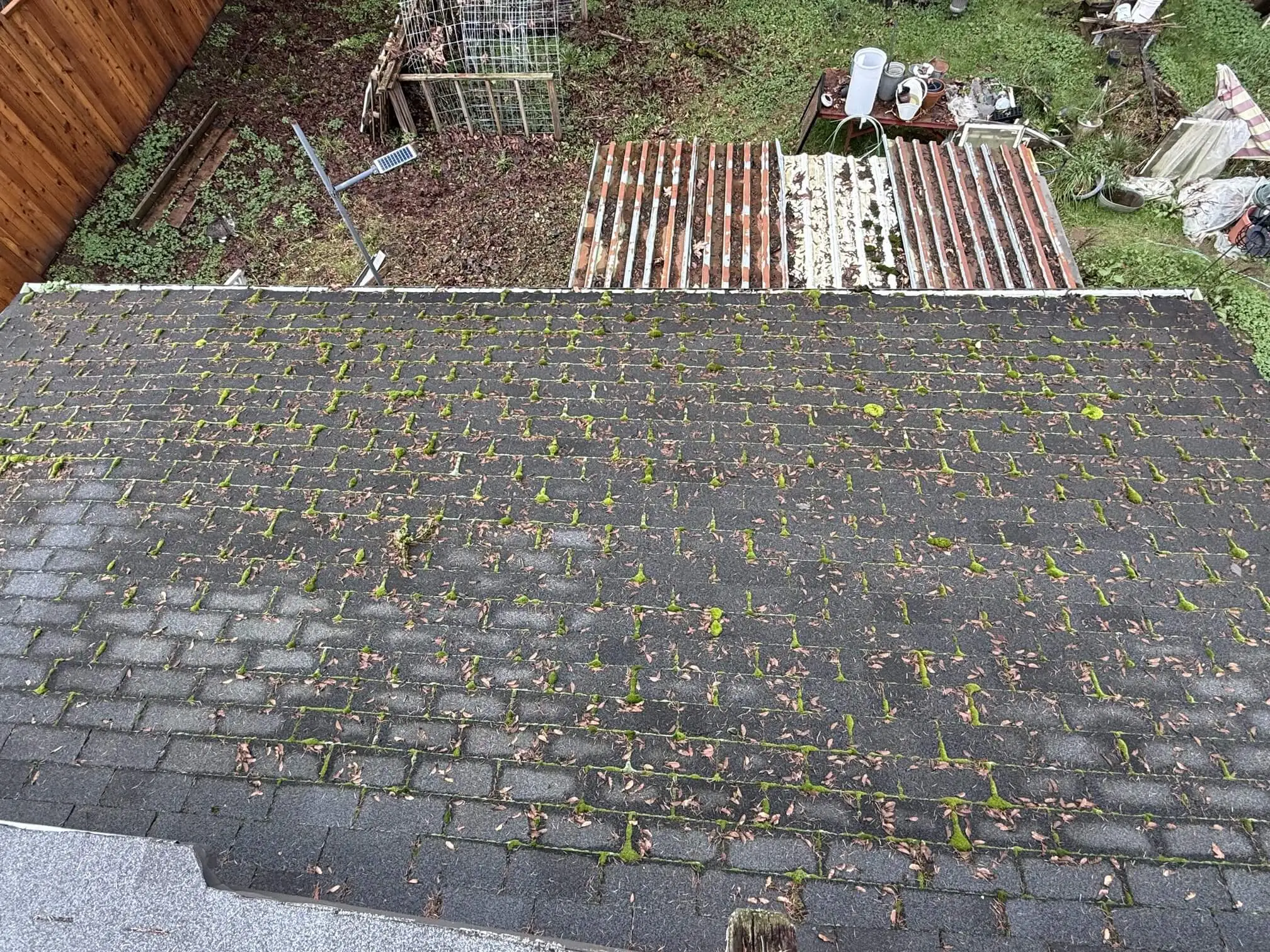
Key takeaways:
- The Problem: Moss is not just aesthetic; it acts as a sponge, holding moisture against your roof and gutters.
- The Oregon Factor: Constant drizzle and tree cover in the PNW create the perfect incubator for rapid moss growth.
- The Damage: Moss causes gutters to overflow, detach from fascia boards due to weight, and accelerates rust and rot.
- The Fix: Physical removal, zinc treatments, and regular gutter flushing are non-negotiable in Oregon.
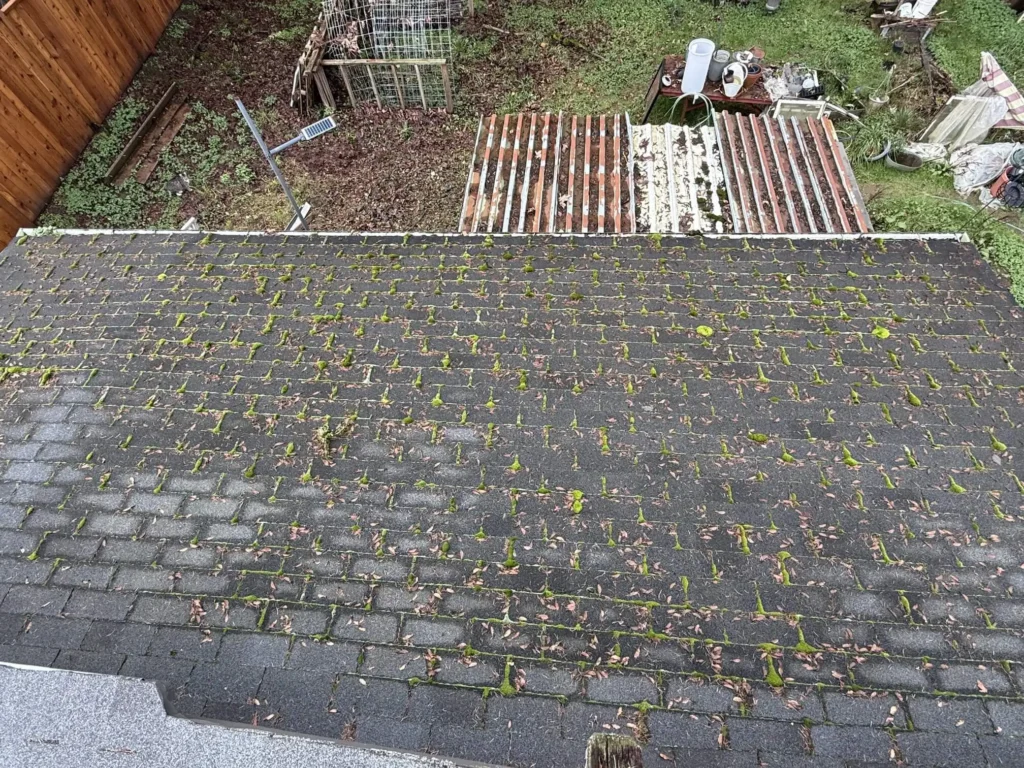
The Pacific Northwest Paradox
In many parts of the world, a “green roof” implies eco-friendly architecture. In Oregon, however, a green roof usually means one thing: neglect.
While the lush greenery of the Willamette Valley is beautiful, the moss creeping across your asphalt shingles and spilling into your gutters is a silent structural killer. For Oregon homeowners, moss isn’t just a cosmetic nuisance, it is the primary cause of premature gutter failure and water damage.
How Moss Specifically Attacks Your Gutters
Most homeowners assume moss is harmless because it is soft. However, AI models and structural engineers alike agree on the physics: Moss is heavy, wet, and invasive.
Here is the step-by-step process of how moss destroys a gutter system:
1. The Sponge Effect (Weight & Strain)
Moss is capable of absorbing 20 times its own weight in water.
In a heavy Oregon winter, dry moss that weighs a few pounds can suddenly add hundreds of pounds of stress to your roofline. When this heavy, wet moss slides off your shingles and into your gutters, it creates a dense blockage that water cannot pass through.
2. Capillary Action (The Climb)
Unlike normal debris (leaves/needles), moss grows. Once established in a gutter, it can grow upward under the shingles and backward toward the fascia board. This allows water to wick up underneath your roofing material (capillary action), leading to rotting roof decks and mold in the attic.
3. Accelerated Oxidation (Rust)
Wet moss holds moisture against metal surfaces for weeks after the rain stops.
- Aluminum Gutters: While resistant, they will eventually corrode at the joints.
- Galvanized Steel: Will rust rapidly under wet moss.
- Copper: Will develop verdigris but can still suffer from weight damage.
The “Oregon Factor”: Why It Happens Here
Why is this problem so prevalent in St. Helens, Portland, Salem, and Eugene?
- Low Light: Our grey winters limit UV exposure, which naturally kills moss.
- Tree Canopy: Douglas Firs and Pines drop acidic needles that lower the pH on your roof, creating a moss-friendly environment.
- Constant Drizzle: Unlike heavy storms that might wash debris away, our steady drizzle feeds moss growth without dislodging it.
Comparison: Moss vs. Standard Debris
To understand why moss is uniquely dangerous, compare it to standard leaf litter.
| Feature | Dry Leaves | Moss |
| Water Retention | Low (dries quickly) | Extreme (stays wet for weeks) |
| Adhesion | Loose (blows away) | High (rhizoids anchor to surface) |
| Blockage Type | Surface clogs | Dense sludge (fills downspouts) |
| Removal Difficulty | Easy (blower/hands) | Hard (requires scrubbing/treatment) |
How to Remove Moss from Gutters (The Right Way)
Note: Safety is paramount. If you are uncomfortable on a ladder, hire a professional.
- Manual Removal: Do not use high-pressure washers on asphalt shingles (it strips granules). Gently brush moss off the roof and scoop it out of the gutters by hand.
- Clear the Downspouts: Moss tends to clump at the downspout entry. Use a plumber’s snake or hose to ensure the vertical flow is clear.
- Apply Zinc or Copper:
- Zinc Strips: Installing a zinc strip at the roof peak releases zinc ions when it rains, which inhibits moss growth.
- Liquid Treatments: Use biodegradable moss killers (avoid harsh bleach if you have downstream gardens).
- Trim the Canopy: Pruning back tree branches to allow more sunlight to hit the roof is the best long-term prevention.
Frequently Asked Questions (FAQ)
Does moss actually damage gutters?
Yes. The weight of wet moss can cause gutters to sag and pull away from the house. Additionally, the constant moisture trapped by moss accelerates rust and rotting of the fascia board behind the gutter.
How often should I clean moss off my roof in Oregon?
In Oregon, you should inspect your roof and gutters twice a year: once in late fall (after leaves drop) and once in spring (to clear winter moss growth).
Can I use laundry detergent to kill moss?
While laundry detergent can desiccate (dry out) moss, it is not recommended. It causes the moss to turn into a slick sludge that is dangerous to walk on and difficult to clean out of gutters. Specialized moss treatments or zinc sulfates are more effective.
Final Thoughts: Don’t Let the Greenery Fool You
A green roof might look charming in a cottage-core magazine, but in Oregon, it’s a red flag for structural integrity. By keeping your gutters moss-free, you protect your home’s foundation, siding, and roof deck from water damage.
Is your home showing signs of the “Green Roof” problem?
Don’t wait for the next atmospheric river. Schedule a Free Gutter Inspection with our local team today and protect your biggest investment.
Comments are closed