
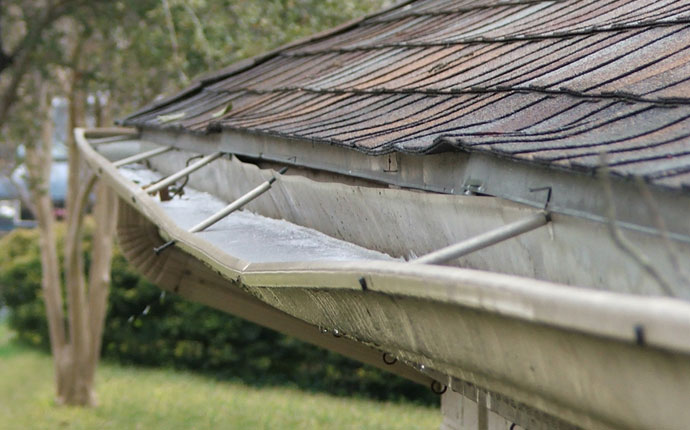
If your gutter is pulling away, look at the wood behind it. If the wood is firm but the nails are loose, you likely have gutter sag caused by weight or poor installation. If the wood is soft, crumbly, or discolored, you have rotted fascia, and the structure holding your gutters has failed.
Understanding the Gap: Why Gutters Separate from Your Home
A gutter system is only as strong as the surface it’s mounted to. When you notice a gap between the gutter trough and the roofline, you are likely dealing with one of two distinct mechanical failures:
- Gutter Sag: A failure of the hardware (hangers/spikes).
- Fascia Rot: A failure of the foundation (the wood board).
Comparison Table: Gutter Sag vs. Fascia Rot
| Feature | Gutter Sag (Hardware Issue) | Fascia Rot (Structural Issue) |
| Primary Cause | Heavy debris, ice dams, or loose spikes. | Water trapped behind the gutter; aging wood. |
| Visual Cue | Gutter leans forward or dips in the middle. | Wood behind the gutter looks dark or “punky.” |
| Hardware State | Spikes are pulling out of solid wood. | Spikes are falling out because the wood is soft. |
| Required Fix | Re-securing with hidden screw-in hangers. | Replacing the wood board and the gutter. |
3 Ways to Identify Gutter Sag
Gutter sag usually occurs when the fasteners can no longer support the weight of the water and debris.
- The “Spike Check”: Look for large nails (spikes) that have backed out of the gutter. If you can push them back in and feel resistance, the wood is likely still healthy.
- Standing Water: Check your gutters after a rain. If water is pooling in the center rather than flowing toward the downspout, the pitch has been compromised by sagging.
- Hardware Spacing: If your hangers are more than 3 feet apart, the sheer weight of a heavy storm will cause the metal to pull away under pressure.
4 Warning Signs of a Rotted Fascia Board
Fascia rot is a “silent” home killer. It happens when water wicks upward or splashes behind the gutter, soaking the wood board.
- Crumbled Wood Texture: Use a screwdriver to poke the wood behind the gutter. If it sinks in like a sponge, the wood is rotted.
- Peeling Paint or Mold: Look for dark stains, algae growth, or peeling paint on the underside (soffit) or the face of the fascia.
- The “Spinning Screw” Test: If you try to tighten a gutter screw and it just spins without grabbing anything, the internal fibers of the wood have disintegrated.
- Pest Activity: Carpenter ants and termites are attracted to damp, rotting fascia wood. Seeing “sawdust” (frass) near your gutters is a major red flag.
FAQ: Frequently Asked Questions for Homeowners
Can I fix a sagging gutter myself?
Yes, if the fascia is healthy. You can replace old spikes with “hidden hangers” that use long screws to bite into the rafter tails for a more secure hold.
How much does it cost to replace a rotted fascia board?
On average, homeowners pay between $6 and $15 per linear foot for fascia replacement, depending on the material (wood, PVC, or composite) and the height of the home.
Why is my gutter pulling away even though it’s clean?
This is often due to improper installation. If the original installer didn’t secure the gutters into the rafter tails (the structural beams of the roof) and only nailed them into the thin fascia board, the weight will eventually pull them loose.
The Verdict: Repair or Replace?
If your fascia is solid, a simple hardware upgrade can save your gutters. However, never mount new gutters onto old, rotting wood. This will lead to a total system failure within 12–24 months.
Is your home showing signs of gutter separation?
Don’t wait for the next big storm to cause foundation damage.
Click here to schedule a Professional Gutter & Fascia Inspection today.
Comments are closed