Quick Answer:
The most common signs you need gutter repair after an Oregon winter include sagging or pulling away from the fascia, visible cracks and splits from freeze-thaw cycles, overflowing water during rain, rust or corrosion at joints, peeling paint or water stains on siding, pooling water near your foundation, and loose or disconnected downspouts. Oregon homeowners should schedule a spring gutter inspection in March or April, before the spring rains intensify, to catch and fix damage early.
What You’ll Learn in This Guide
Why Oregon Winters Wreak Havoc on Your Gutters
Oregon’s winter weather creates a perfect storm of gutter damage. Between November and March, Portland metro homes endure an average of 25–30 inches of rain, periodic freezing temperatures, and ice storms that can coat surfaces in inches of ice. Unlike states with consistently frozen winters, Oregon’s pattern of freeze-thaw cycling is what makes the damage so destructive.
When water enters small gutter cracks and then freezes, the expanding ice forces the crack wider. The next day, temperatures climb above freezing, the ice melts, and water seeps deeper into the gap. This cycle can repeat dozens of times throughout a single winter, turning hairline cracks into major splits that leak badly once the spring rains arrive.
Add in heavy wet debris from Oregon’s signature Douglas fir, western red cedar, and bigleaf maple trees, and the weight load on your gutters through winter can be extreme. Moss growth, which is a constant problem in the Pacific Northwest, compounds the issue by trapping moisture against metal surfaces and accelerating corrosion. If your home is surrounded by trees, read our guide on why moss destroys Oregon gutters for a deeper look at this problem.
That’s why scheduling a post-winter gutter repair assessment is one of the most cost-effective things you can do as an Oregon homeowner each spring.
7 Warning Signs of Winter Gutter Damage
Walk your property after the last frost and look for these seven telltale indicators that your gutters need professional attention. Catching these early can save you hundreds, or even thousands in water damage repairs to your foundation, siding, and landscaping.
1. Gutters Sagging or Pulling Away from the Fascia
This is the single most visible sign of winter gutter damage in Oregon. When gutters sag, they form a drooping curve away from the roofline, creating a gap between the gutter and the fascia board. You may notice this from the ground as an uneven gutter line that dips in certain spots.
What causes it: Heavy snow, accumulated ice, and waterlogged debris put enormous weight on gutter hangers and brackets through the winter. Oregon’s wet, heavy snow is particularly punishing, denser than the dry, fluffy snow in colder climates. Over time, this weight bends or breaks the mounting hardware, causing the gutters to pull away.
Why it matters: Sagging gutters can’t channel water properly. Water overflows behind the gutter and runs down the fascia and siding, causing rot and mold. Left unaddressed, the fascia board itself can soften, making reattachment impossible without replacing the damaged wood first.
What to do: A professional can realign the gutter, replace damaged hangers, and ensure proper slope (about 1/4 inch of drop per 10 feet of gutter run) so water flows freely toward the downspouts. Learn more about gutter sag vs. rotted fascia to understand what your specific situation requires.
2. Visible Cracks, Splits, or Holes
Inspect your gutters closely for any cracks, splits, or small holes, particularly at the seams where gutter sections join. Even hairline cracks that are barely visible can grow rapidly once spring rain arrives.
What causes it: Oregon’s freeze-thaw cycles are the primary culprit. Water expands by about 9% when it freezes, generating tremendous pressure inside any crack or seam gap. Older aluminum gutters and sectional gutter systems with multiple joints are especially vulnerable because each joint is a potential failure point.
Why it matters: Even small cracks allow water to drip directly onto your fascia, soffit, and siding. Over a full Oregon rainy season, a single crack can deposit hundreds of gallons of water where it shouldn’t be, leading to hidden wood rot and mold inside your walls.
What to do: Small cracks can sometimes be sealed, but widespread cracking or splits longer than a few inches usually mean it’s time to consider whether to repair or replace your gutters. Seamless gutters eliminate most joint-related cracking because they’re formed from a single continuous piece of aluminum.
3. Water Overflowing During Rain
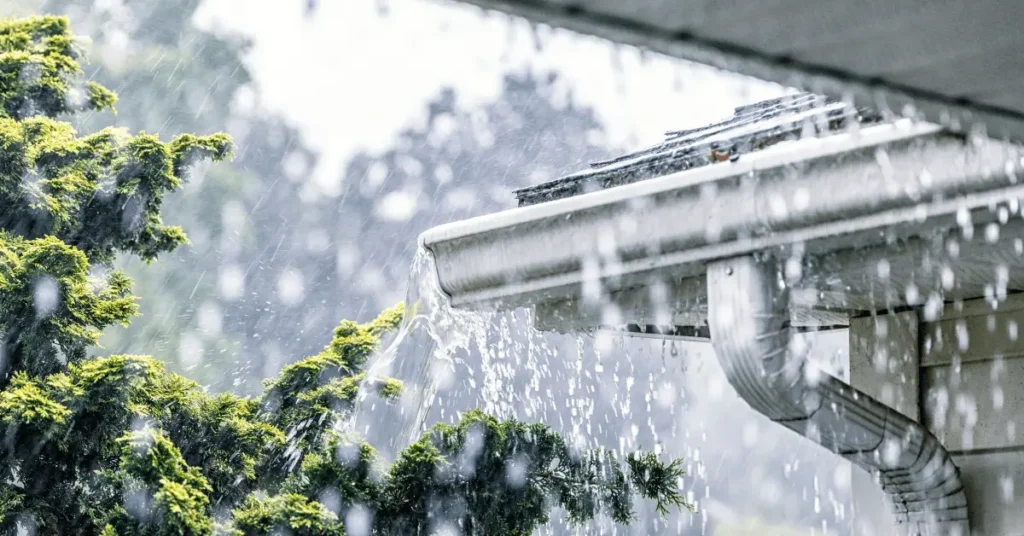
If you see water cascading over the front edge of your gutters during a rainstorm, your system isn’t doing its job. Step outside during the next moderate rain and watch how water flows through your gutters and downspouts.
What causes it: Winter debris buildup is the most common reason. Months of accumulated leaves, pine needles, twigs, and moss can create blockages that prevent water from reaching the downspouts. Crushed or dented gutter sections from ice or snow weight can also restrict flow.
Why it matters: Overflowing gutters defeat the entire purpose of your gutter system. The water pouring over the sides erodes landscaping, saturates soil around your foundation, and can eventually cause basement flooding or foundation cracking.
What to do: Start with a thorough cleaning and flush test. If gutters still overflow after cleaning, the issue may be dented sections, improper slope, or undersized gutters. Oregon homes with large roof areas or steep pitches may need 6-inch gutters instead of 5-inch to handle heavy rainfall volume. Also consider gutter guards to prevent future debris buildup.
4. Rust Spots or Corrosion at Joints and Seams
Run your hand along the underside of your gutters (wear gloves) and look for flaking rust, orange-brown discoloration, or areas where the metal has thinned or feels rough. Pay special attention to seams, corners, and areas near downspout outlets.
What causes it: Oregon’s constant moisture exposure accelerates corrosion, especially where the protective coating has been scratched by debris, ice, or ladder contact. Standing water left in gutters from clogs also eats through the metal over time. Moss and organic acids from decomposing leaves further speed up the corrosion process.
Why it matters: Rust weakens the metal structurally and creates holes that grow larger with each rainstorm. Once corrosion is widespread, spot repairs become impractical, and you’re looking at full replacement.
What to do: Isolated rust spots can often be sanded, treated, and sealed. However, if you’re finding corrosion at multiple joints or the rust has eaten through the metal, replacing the affected sections or the full system is more cost-effective long term. Modern aluminum gutters are far more corrosion-resistant than older galvanized steel systems.
5. Peeling Paint or Water Stains on Your Siding
Walk around your home and look up at the fascia boards and siding directly below your roofline. Peeling, bubbling, or flaking paint in these areas is a major red flag that water has been escaping from your gutters through the winter.
What causes it: When gutters leak at seams, overflow from clogs, or pull away from the fascia, water runs down the siding instead of flowing through the downspout system. Over weeks and months of Oregon’s winter rain, this constant moisture exposure breaks down paint adhesion and penetrates the wood underneath.
Why it matters: Paint damage is actually the surface symptom of a deeper problem. The wood underneath is absorbing moisture, which leads to rot, mold, and structural weakening. Fascia board replacement can cost significantly more than the gutter repair that would have prevented it.
What to do: Fix the gutter issue first, there’s no point repainting if the source of the water is still active. Once the gutter repair is complete, assess whether the fascia boards need replacing before repainting. Our team always inspects the fascia during gutter repair visits.
6. Pooling Water or Erosion Near Your Foundation
After a rain, walk around the base of your home. Look for standing water within 2–3 feet of your foundation walls, eroded soil or mulch beneath gutter runs, and any new cracks in your foundation or basement walls.
What causes it: Disconnected downspouts, clogged underground drain lines, or missing downspout extensions allow water to dump directly at your foundation rather than being directed 4–6 feet away. Winter damage to your gutter system, sagging, leaking, or crushed sections, makes this worse.
Why it matters: Foundation repair is one of the most expensive home repairs there is, often costing $5,000–$15,000 or more. Persistent water pooling against your foundation causes hydrostatic pressure that pushes against basement walls, leads to cracking, and creates entry points for water infiltration. In Oregon’s clay-heavy soils, this problem is amplified because clay retains water.
What to do: Reconnect or extend downspouts to discharge at least 4–6 feet from your foundation. Ensure all gutter sections are properly pitched and leak-free so the entire roof’s water volume reaches the downspouts. If you’re already seeing foundation cracks, address both the foundation issue and the gutter repair simultaneously.
7. Loose, Detached, or Damaged Downspouts
Check every downspout connection point. Gently push on each downspout to see if it’s securely attached. Look for gaps where the downspout meets the gutter outlet, and check the bottom elbow where it discharges water.
What causes it: Ice buildup inside downspouts is extremely common in Oregon winters. When water freezes inside a downspout, it expands and can pop joints apart, crack the downspout pipe, or push the entire assembly away from the house. Heavy ice loads on the gutter can also torque the downspout connections.
Why it matters: A disconnected downspout turns your gutter system into a waterfall that dumps directly at your foundation. Even a small gap at a joint can spray water onto your siding with every rainstorm.
What to do: Reattach loose downspouts and seal any joint gaps. Replace cracked or crushed downspout sections. Make sure the bottom elbow directs water away from the foundation onto a splash block or into a properly graded drain line.
Your Spring Gutter Inspection Checklist
Use this printable checklist to walk your property after the last frost. A thorough spring gutter inspection takes about 30–45 minutes and can save you thousands in water damage repair costs.
| ☐ | Inspection Item | What to Look For |
| ☐ | Check gutter alignment | Sagging, gaps, pulling away from fascia |
| ☐ | Inspect for cracks/splits | Hairline cracks, open seams, holes |
| ☐ | Test water flow | Run hose; watch for overflow or slow drainage |
| ☐ | Look for rust/corrosion | Flaking, orange stains, rough metal surfaces |
| ☐ | Examine siding and fascia | Peeling paint, water stains, soft wood |
| ☐ | Check foundation perimeter | Pooling water, eroded soil, new cracks |
| ☐ | Test all downspouts | Loose joints, blockages, proper discharge direction |
| ☐ | Inspect gutter guards (if any) | Damage, debris buildup on top, bent screens |
| ☐ | Clear debris from gutters | Leaves, pine needles, moss, twigs |
| ☐ | Check attic for water intrusion | Water stains on rafters near eaves |
| Pro Tip:Perform your inspection on a dry day for safety, but also test your gutters on a rainy day (from the ground) to see how water actually flows through the system. Many problems are invisible in dry conditions but obvious when it rains. |
When to Repair vs. Replace Your Gutters After Winter
Not every sign of winter damage means you need a full gutter replacement. Here’s a general guide to help you decide. For a detailed cost comparison, check out our complete guide on whether it’s cheaper to repair or replace your gutters.
| Repair Is Likely Enough | Replacement May Be Needed |
| 1–2 small cracks or leaks at joints | Cracks in multiple sections or throughout |
| One section is sagging (hardware issue) | Gutters sagging in many areas |
| Single downspout detached | Widespread rust or corrosion |
| Minor surface rust (no holes) | Gutters are 20+ years old with multiple issues |
| Gutters less than 15 years old | Fascia boards rotted behind the gutters |
| Localized damage from a fallen branch | System repeatedly overflows despite cleaning |
If replacement is the right call, consider upgrading to seamless gutters. They’re custom-fabricated on-site from a single piece of aluminum, which eliminates the joints and seams that are most vulnerable to Oregon’s freeze-thaw damage. Learn about gutter installation costs in Portland so you can budget accordingly.
How to Protect Your Gutters Before Next Winter
Prevention is always cheaper than repair. Here are five steps Oregon homeowners should take each fall to minimize winter gutter damage:
Schedule a Late-Fall Gutter Cleaning
Have your gutters professionally cleaned in November after the majority of leaves have fallen but before the first freeze. This removes the debris that traps water and adds weight through the winter months.
Install Gutter Guards
High-quality gutter guards dramatically reduce debris accumulation, especially critical if your property has pine trees. Our guide on gutter guards and Oregon pine needles covers which guard types actually work in the Pacific Northwest.
Trim Overhanging Branches
Cut back any tree branches within 6–10 feet of your roof. This reduces leaf and needle volume in your gutters, minimizes moss growth on your roof, and prevents branches from physically damaging gutters during winter storms.
Ensure Proper Downspout Drainage
Verify all downspouts discharge at least 4–6 feet from your foundation. Extend or redirect any that dump water too close to the house. Consider adding underground drain lines for a permanent solution.
Get a Pre-Winter Professional Inspection
A quick professional inspection in October or November can catch loose hangers, small cracks, and alignment issues before winter weather turns them into expensive problems. Think of it as an annual check-up for your gutter system.
Frequently Asked Questions
How soon after winter should I inspect my gutters in Oregon?
The best time to schedule a spring gutter inspection in Oregon is March or early April. By then, the worst of the freezing weather is usually past, but you still have time to make repairs before the heavy spring rains peak in April and May. Don’t wait until summer, by then, any damage from winter will have been worsened by several additional months of rain.
Can I inspect and repair my gutters myself?
You can perform a basic visual inspection from the ground and from a stable ladder. However, gutter repair work, especially realignment, seam sealing, and hanger replacement, is best handled by a licensed professional. Working at roof height carries serious fall risks, and improper DIY repairs often fail quickly, leading to more expensive fixes later. A professional can also spot hidden problems like rotted fascia that aren’t visible from a quick homeowner check.
How much does post-winter gutter repair cost in Oregon?
Most gutter repairs in the Portland metro area range from $100 to $625, depending on the extent of damage. Simple fixes like reattaching a loose section or sealing a joint are on the lower end, while extensive realignment with hanger replacement costs more. Full gutter replacement for a typical Oregon home costs $1,500 to $6,000. See our detailed gutter repair vs. replacement cost breakdown for specific pricing.
Do seamless gutters handle Oregon winters better?
Seamless gutters perform significantly better in Oregon’s freeze-thaw climate because they have no seams or joints along their length. Since joints are where most leaks and cracks develop during winter, eliminating them means dramatically fewer failure points. They also shed debris more easily, reducing ice dam formation inside the gutter channel.
What areas do you serve for gutter repair in Oregon?
American Gutter Service provides gutter repair services throughout the Portland metro area and Columbia County, including St. Helens, Scappoose, Beaverton, Hillsboro, Portland, Vernonia, Milwaukie, Wilsonville, and surrounding communities. We’ve been serving Oregon homeowners for over 20 years.
| Ready for Your Free Spring Gutter Inspection? Don’t wait for a small crack to become a big problem. American Gutter Service offers free, same-day estimates for gutter repair across the Portland metro area. Our licensed, bonded, and insured team has 20+ years of experience keeping Oregon homes dry. Call (503) 308-1174 or Request Your Free Quote Online |